Introduction: The Growing Problem of Case Delays
Drug case processing delays are often caused by capacity constraints during investigations, forensic testing, and court proceedings. These delays slow the progression from arrest to final disposition, creating challenges for law enforcement and the justice system.
Research indicates that increasing submission volumes have put significant pressure on forensic laboratories, particularly in controlled substance analysis, where laboratory turnaround times can extend from weeks to months. Delays in analysis can compromise evidence quality, reduce case strength, and prolong unnecessarily prosecution timelines. Drug cases especially can be time-sensitive because delays can affect evidence quality (e.g. drug decomposition). (For academic research reference please refer here and here).
While most of the research focuses on efficiency and justice outcomes, the impact on officer morale is an underexplored but critical consequence when officers repeatedly see cases stalled by systemic delays.
Backlog in Sample Analysis
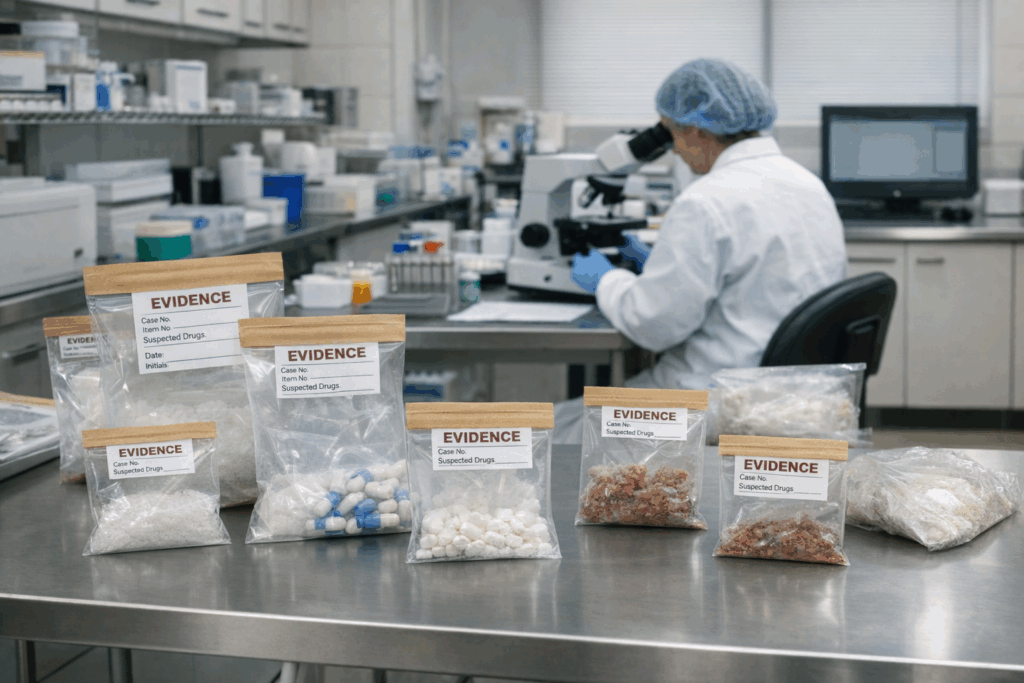
Controlled substance analysis frequently experiences backlogs due to rising case volume and limited laboratory capacity. Analytical procedures are resource-intensive, and staff, funding, and equipment constraints further slow case processing.
High-volume jurisdictions face extended timelines, particularly when increasing drug seizures generate more complex samples. Delays in drug identification can lead to inconclusive results, case complications, and slower progression to prosecution.
Operational Consequences for Law Enforcement
This delays in getting lab results triggers a chain reaction across law enforcement institutions: when laboratory turnaround times increase, cases remain open longer, administrative workload rises and investigative resources are diverted away from proactive policing toward case management. Sustained backlog pressure strains personnel capacity, particularly in high-volume drug analysis units, which contributes to workforce instability and turnover, further reducing processing capability and compounding delays. (cite) Over time, sustained backlog pressure places strain across the justice ecosystem, affecting investigative pacing, prosecutorial timelines, and administrative coordination. (Cite).
Potential Psychological Impact on Officers

Although research specifically examining morale in drug cases is limited, organizational strain models indicate that prolonged systemic inefficiencies,such as delays in drug analysis, can generate cumulative psychological stress. When officers repeatedly face stalled cases, postponed prosecutions, and limited closure, the disconnect between their effort and tangible outcomes can erode motivation, reduce resilience, and weaken trust in the institution.
Frustration and Reduced Motivation
When officers complete arrests, paperwork, and evidence submission but then have to wait months for analysis results, the perceived link between action and outcome weakens. Over time, repeated delays can reduce intrinsic motivation, as officers may feel their efforts do not meaningfully advance justice.
Emotional Exhaustion and Burnout
Extended case timelines increase administrative workload and prolonged monitoring of unresolved investigations, all of which can contribute to chronic occupational stress. When high-effort enforcement actions do not lead to timely resolution, emotional fatigue can accumulate, increasing the risk of burnout.
Solution to the Problem
Laboratory backlogs are not solely a resource problem but can also be a workflow design issue. Centralized laboratory models, while scientifically rigorous, create capacity constraints when case volumes exceed processing capabilities. Addressing delays in drug analysis therefore requires structural solutions that reduce reliance on slow laboratory confirmation and shift certain analytical capabilities closer to the point of seizure.
Decentralizing presumptive drug identification allows agencies to interrupt this chain of delays, accelerating charging decisions, reducing administrative burdens, and restoring investigative momentum. When implemented strategically, such technologies can enhance both operational efficiency and officer morale by reconnecting effort with timely outcomes.
Potential for Handheld Analysis Tools
Handheld drug identification tools provide a practical solution to laboratory backlogs by serving as prescreening instruments that deliver rapid, on-scene presumptive analysis of suspected controlled substances. By enabling agencies to triage evidence, reduce unnecessary laboratory submissions, and prioritize high-value cases, these devices help ease laboratory workload, shorten turnaround times, and improve overall system efficiency without replacing or compromising accredited confirmatory forensic testing.
Applied Case Study: 908 Devices Pilot Program in Ohio
To address prolonged analysis delays, the Ohio Bureau of Criminal Investigation partnered with 908 Devices to pilot handheld mass spectrometry for field-based drug identification. Over two years, 388 officers across 153 agencies in 65 counties were trained to use the MX908, enabling presumptive drug identification at the point of seizure rather than waiting for laboratory confirmation.
The result was faster case progression, improved prosecutorial timelines, and reduced case stagnation. Agencies reported that immediate field analysis helped prevent prolonged release of suspects pending lab results, strengthened investigative confidence, and restored a sense of completion and professionalism among officers. (Full report of their study viewable here)
NIRLAB as a Potential solution
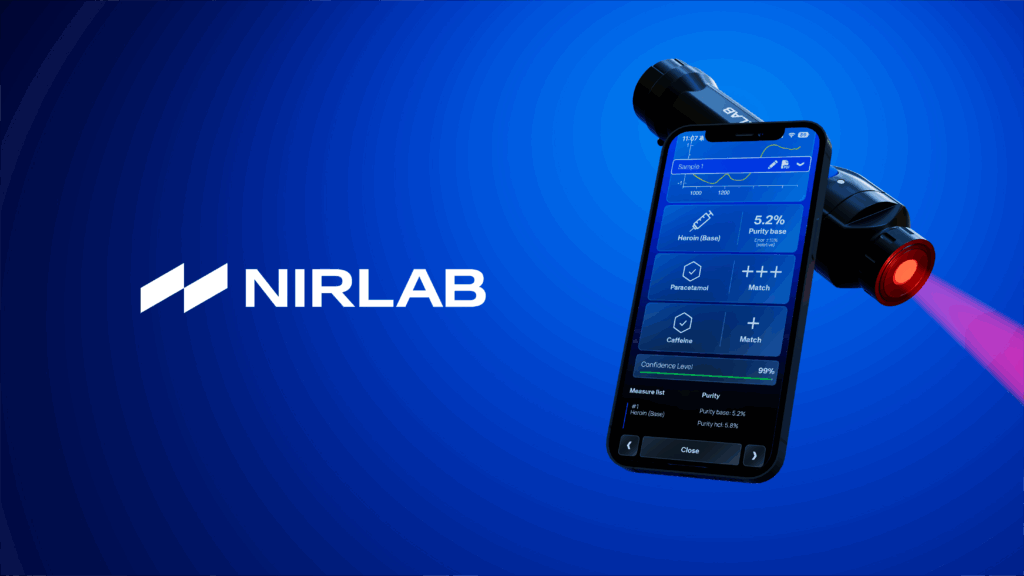
Similarly, NIRLAB’s portable near-infrared (NIR) spectroscopy technology is designed to function as a frontline prescreening solution, enabling rapid, non-destructive, real-time analysis of suspected controlled substances directly in the field. Capable of identifying a broad range of compounds, including cannabis and other commonly encountered drugs, through thin packaging and without sample preparation, the system allows officers to triage evidence before it enters the laboratory queue.
By distinguishing high-priority cases from lower-risk submissions, NIRLAB helps reduce unnecessary laboratory workload, shorten turnaround times, and improve overall case flow. The device is built for safe and straightforward operation, minimizing exposure risks while providing immediate analytical insight. In addition to strengthening workflow efficiency and supporting prosecutorial timelines this approach can positively influence officer morale. When officers receive real-time feedback and can actively move a case forward at the point of seizure, they regain a sense of agency and proactive participation, which may enhance intrinsic motivation and reinforce professional confidence.
Ultimately, effectively addressing laboratory backlogs requires fast, portable field tools that empower laboratories, improve triage, and accelerate case flow—while preserving laboratory resources for the most difficult and demanding cases that require advanced analytical techniques. This approach ensures both operational efficiency and sustained officer engagement.
Other intersting articles on this topic: Guilty until Proven Innocent: Rethinking Presumptive Drug Tests; What Is Pink Cocaine (Tusi)? The Hidden Dangers; Heroin Analysis – Challenges and Opportunities.
Conclusion: Why Morale Matters in Narcotics Enforcement
Delays in drug analysis are not merely administrative inefficiencies—they create a cascading impact that affects case outcomes, institutional performance, and officer morale. When laboratory backlogs slow prosecutions, divert investigative resources, and weaken the connection between effort and outcome, the consequences extend beyond workflow disruption to officer motivation, resilience, and public trust. Addressing these delays therefore requires more than additional staffing or funding; it requires structural improvements in how and where analysis occurs.
By integrating prescreening tools that safely and efficiently shift certain analytical capabilities closer to the point of seizure, agencies can interrupt this chain of delays. Solutions such as NIR-based handheld analysis support laboratories rather than replace them, reduce unnecessary submissions, accelerate case flow, and restore investigative momentum. Ultimately, when officers are empowered with timely analytical insight, agencies not only strengthen operational efficiency but also reinforce professionalism, confidence, and intrinsic motivation across their ranks.
To explore more about spectroscopy and discover the full capacities of NIRLAB’s technology, we invite you to read our other informative articles, here. Additionally, for personalized inquires please don’t hesitate to reach out to us at contact@nirlab.com.