In the expansive world of spectroscopic analysis, Near-Infrared (NIR) and Ultraviolet (UV) Spectroscopy emerge as two distinct yet fundamental techniques. Both play a pivotal role in material analysis, offering unique insights into the molecular makeup of various substances. In this article, we will explore the basics of NIR and UV spectroscopy. This by highlighting their differences, advantages, and practical applications, especially in the context of NIRLAB’s expertise in Near-Infrared technology.
Understanding NIR Spectroscopy
Fundamentals of NIR Spectroscopy
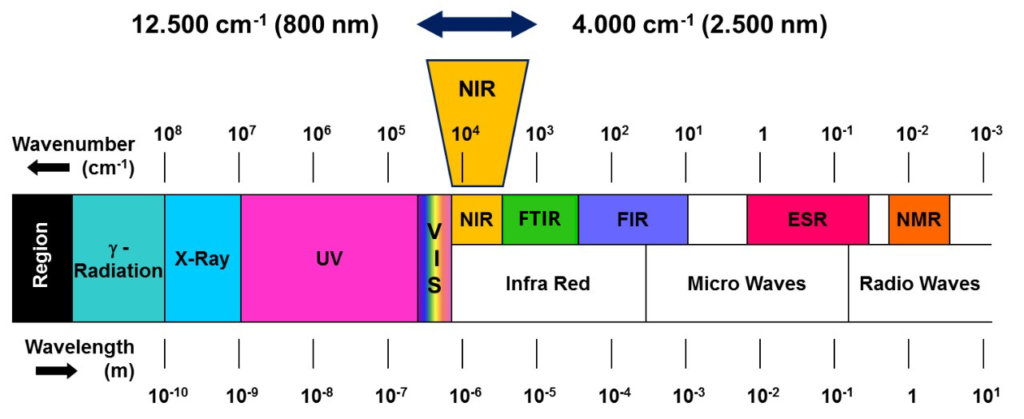
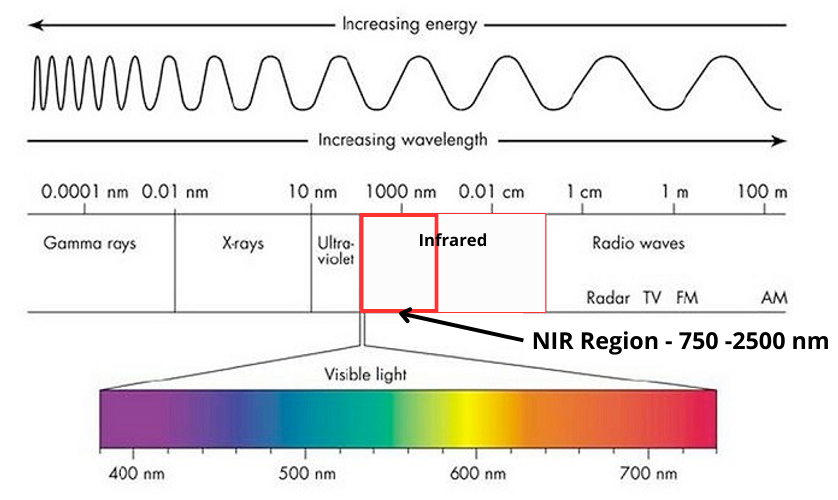
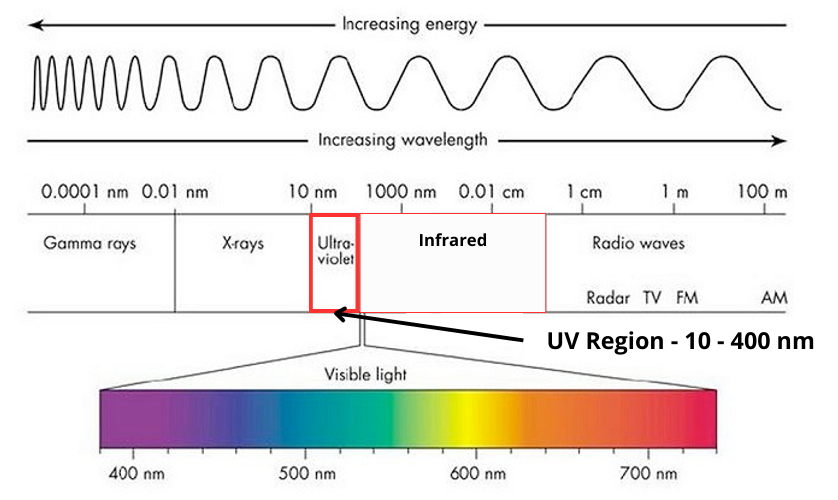
Near Infrared spectroscopy operates within the near-infrared region of the electromagnetic spectrum, ranging from 750 to 2500 nanometers. Hence, this method is highly effective in analyzing organic compounds, utilizing the absorption of near-infrared radiation to reveal details about their functional groups. Moreover, Near IR spectroscopy is renowned for its non-destructive approach, enabling repeated analyses without altering the sample. To delve deeper into Near Infrared spectroscopy, refer to our blog “The Science Behind NIR: How It Helps in Material Identification“
Advantages of NIR Spectroscopy
- Rapid Analysis: Delivers quick results, typically within seconds, ideal for time-sensitive applications.
- Non-Destructive Testing: Preserves the integrity of the sample, allowing for multiple analyses.
- Versatile Applications: Applicable across various industries, from pharmaceuticals to agriculture.
- Safety and Ease of Use: Utilizes low-energy radiation. Hence, ensuring safety for operators and samples.
Exploring Ultraviolet Spectroscopy
Principles of Ultraviolet (UV) Spectroscopy
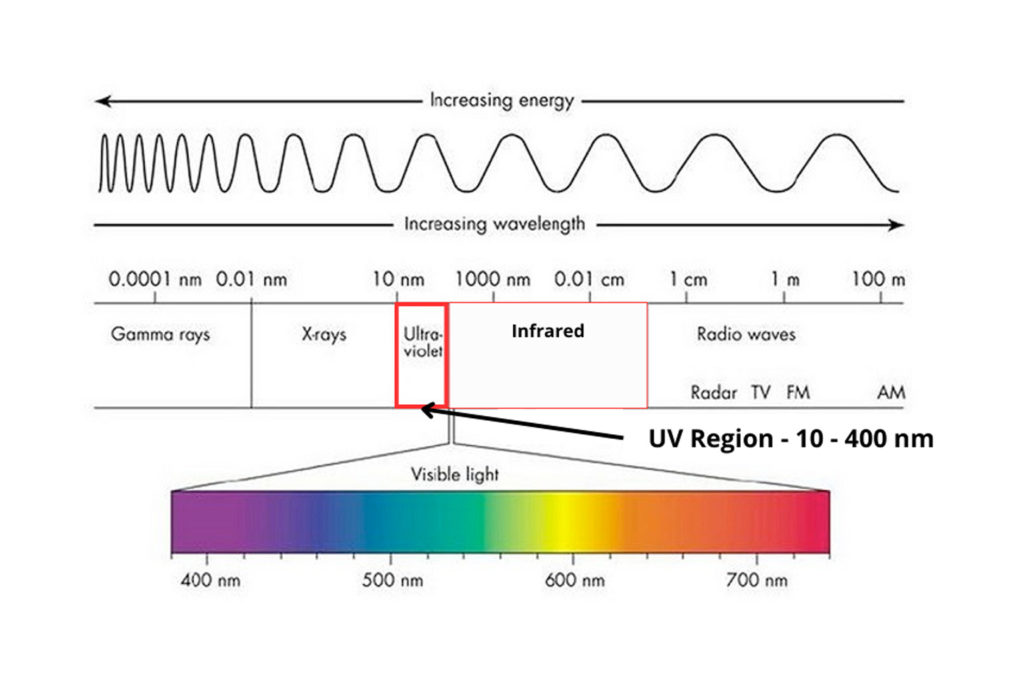
Ultraviolet spectroscopy is a sophisticated analytical technique that investigates the ultraviolet region of the electromagnetic spectrum, typically spanning wavelengths from about 10 nm to 400 nm. Therefore, this method is exceptionally proficient in examining the electronic transitions in molecules, a critical aspect in understanding the intricacies of chemical bonds and structures. It is particularly invaluable in the analysis of organic compounds, notably those with conjugated systems, where it provides deep insights into the molecular architecture and interactions.
Benefits of Ultraviolet (UV) Spectroscopy
- Specialized Applications: Used in pharmaceuticals, environmental science, and biochemistry.
- Quantitative Capability: Precise concentration determination in solutions.
- Sample Versatility: Analyzes liquids, gases, and solids.
- Analytical Depth: Provides insights into molecular structures and electronic configurations.
Comparative Analysis: NIR vs. UV-Vis
When considering NIR versus UV spectroscopy, the decision hinges largely on the specific requirements of the analysis. Near IR spectroscopy is celebrated for its rapid, non-invasive capabilities, making it highly suitable for on-the-go assessments and a wide range of industrial applications. Additionally, NIRLAB’s handheld devices are a testament to this, offering quick and accurate results with minimal sample preparation.
UV spectroscopy, in contrast, excels in providing a more intricate and detailed quantitative analysis, particularly useful in solution-based studies. Its significance in laboratory settings is profound, especially in detailed chemical reaction analysis, pharmaceutical studies, and understanding biological systems. Lastly, the detailed spectral data obtained from UV spectroscopy make it an invaluable tool for in-depth scientific research and quality control in various industries.
Applications Across Industries
- NIR in Industry: Near IR spectroscopy sees extensive use in sectors like pharmaceuticals for quality control and agriculture for soil and crop analysis.
- UV in Industry: UV spectroscopy is crucial in environments like environmental monitoring, and biochemistry.
Conclusion
In spectroscopic analysis, Near-Infrared (NIR) and Ultraviolet (UV) spectroscopy each offer distinct advantages. Near-Infrared, exemplified by NIRLAB’s handheld devices, provides rapid and non-destructive analysis for various applications, while UV spectroscopy excels in meticulous quantitative analysis in laboratory settings.
The choice between NIR and UV spectroscopy depends on specific analysis requirements, including sample nature, depth of analysis, and the operational environment. Also, NIRLAB’s efficient and user-friendly Near IR technology is ideal for quick and accurate analysis without sacrificing quality.
In summary, Near-Infrared spectroscopy, especially NIRLAB’s portable devices, offers versatility, while UV spectroscopy remains essential for in-depth laboratory analysis. Both techniques contribute significantly to our understanding of materials and substances, complementing each other in spectroscopic analysis.
To explore NIRLAB’s innovative material analysis technology and learn more about NIR and UV spectroscopy, visit our website, here or contact us at contact@nirlab.com.