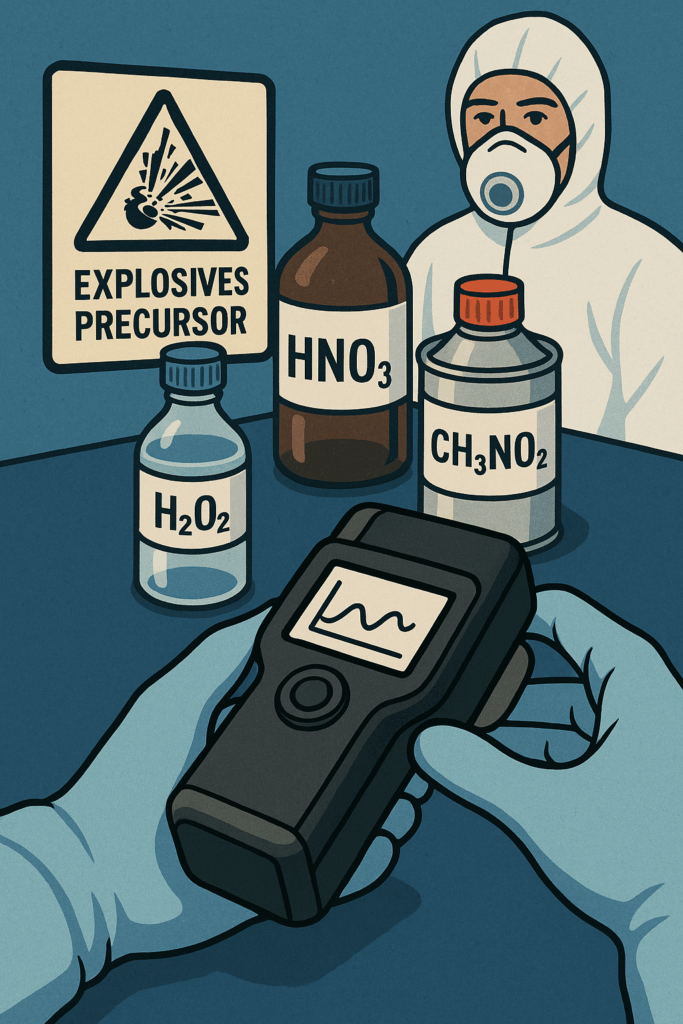
For centuries, Indigenous communities have consumed ayahuasca in carefully guided ceremonies deep within the Amazon rainforest. Today, that same dark, bitter brew is increasingly appearing in customs seizures, forensic laboratories, and courtrooms around the world.
What was once a sacred ritual has become an analytical and legal challenge sitting at the intersection of culture, chemistry, and global drug control.
What Is Ayahuasca?
Ayahuasca is a psychoactive brew traditionally used by Indigenous tribes of the Amazon Basin for spiritual, medicinal, and ceremonial purposes. Its name comes from the Quechua words aya (“spirit” or “ancestor”) and waska (“vine”), reflecting its deep cultural and spiritual significance.
The brew is typically prepared by combining two plants:
- Banisteriopsis caapi, a vine rich in β-carboline alkaloids (such as harmine and harmaline)
- Psychotria viridis, a leaf containing the psychoactive compound N,N-dimethyltryptamine (DMT),a tryptamine structurally related to serotonin.
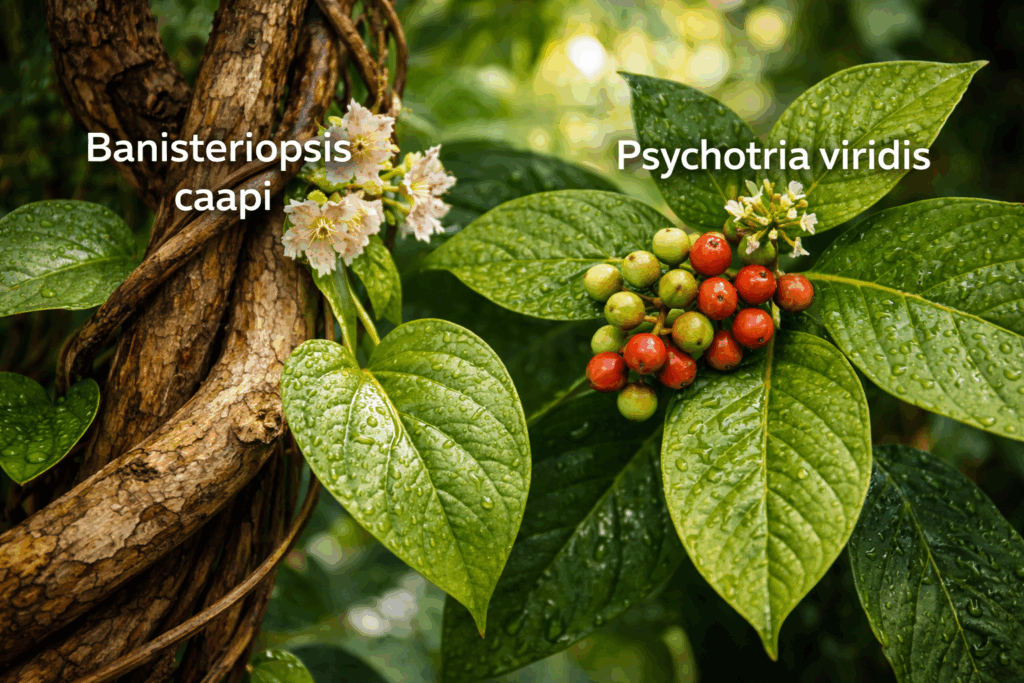
At the core of Ayahuasca’s psychoactivity is chemistry.
Banisteriopsis caapi contains β-carboline alkaloids, which inhibit monoamine oxidase A (MAO-A). This enzyme would otherwise break down DMT before it can reach the brain. The leaves of Psychotria viridis provide the DMT, which produces psychedelic effects. By inhibiting MAO-A, β-carbolines prevent the breakdown of DMT in the digestive system. This allows DMT to enter the bloodstream and reach the brain when consumed orally.
To summarize: The bark of Banisteriopsis caapi stops the stomach enzymes from breaking down the DMT found in the leaves of Psychotria viridis. This allows the DMT to reach the brain, where it produces hallucinogenic effects.
Individually, these plants would not produce the characteristic Ayahuasca experience when consumed orally. Together, however, they create a unique chemical synergy that allows DMT to become active in the body.
In addition to these key compounds, ayahuasca brews often contain dozens of secondary plant metabolites. These additional compounds can influence both the effects of the brew.
Cultural Roots and Global Expansion
For generations, experienced shamans have led ayahuasca ceremonies as part of Indigenous healing traditions. Ritual chanting (icaros), purification practices, and strict ceremonial rules shaped its use.

Why has there been a surge in Western spiritual interest:
Although ayahuasca originates from ancient Amazonian rituals, interest in it has increased significantly in Western countries since the 1990s. Now special retreat centers started operating not only in South America but also in Europe, North America and Australia. In general, an increased consumption of hallucinogenic drugs can be observed globally, including LSD, MDMA and psilocybin (Magic Mushrooms), as reported by S. Lake and P. Lucas in the International Journal of Drug Policy.
Most common motives mentioned by consumers include personal growth, spiritual insight and well-being.
Different plant species, preparation techniques, boiling times, and storage conditions produce brews with highly variable chemical compositions. This variability increases the risk for consumers.
Increased scientific interest
Researchers have shown growing interest in ayahuasca, particularly DMT, across multiple scientific fields due to its high clinical potential to ease depression as well as other mental disorders such as anxiety and PTSD.
Ayahuasca and the Legal Grey Zone
The globalization of Ayahuasca has placed it in a regulatory grey area. While DMT is classified as a Schedule I controlled substance under United Nations 1971 Convention on Psychotropic Substances, many jurisdictions do not explicitly prohibit ayahuasca itself.
Some countries, such as Brazil and Peru, legally protect Ayahuasca for traditional or religious use. In contrast, possession or importation in much of Europe and North America can lead to prosecution due to its DMT content.
Variability and Analytical Implications
From an analytical perspective, Ayahuasca is not a single drug but a complex, variable mixture. Analytical studies report DMT concentrations ranging widely depending on plant ratios, preparation methods, and degradation over time.
This variability has several implications:
- High composition variability
- big potency variability
- Traditional presumptive field tests often fail to detect DMT in complex organic mixtures.
Global demand for traditional Amazonian plant medicines has led to Ayahuasca appearing in non-traditional forms, such as powders, capsules, and pre-brewed liquids. As a result, the need for reliable and adaptable detection tools has become more urgent.
Detection Challenges in the Field
Conventional laboratory techniques such as LC-MS/MS provide high analytical accuracy. However, they require specialized facilities, trained personnel, and time that are often unavailable during border inspections or frontline operations.
Field testing kits designed to identify single substances often fail when confronted with complex botanical mixtures like ayahuasca.. False negatives or inconclusive results can delay investigations and complicate legal proceedings.
NIRLAB’s Potential in Ayahuasca Detection
Near-Infrared Spectroscopy as a Potential Detection Approach
The complex and variable composition of Ayahuasca highlights the limitations of traditional presumptive field tests, which are typically designed to identify single, well-defined compounds. Plant-based mixtures containing multiple active and inactive components require analytical methods capable of handling chemical complexity without extensive sample preparation.
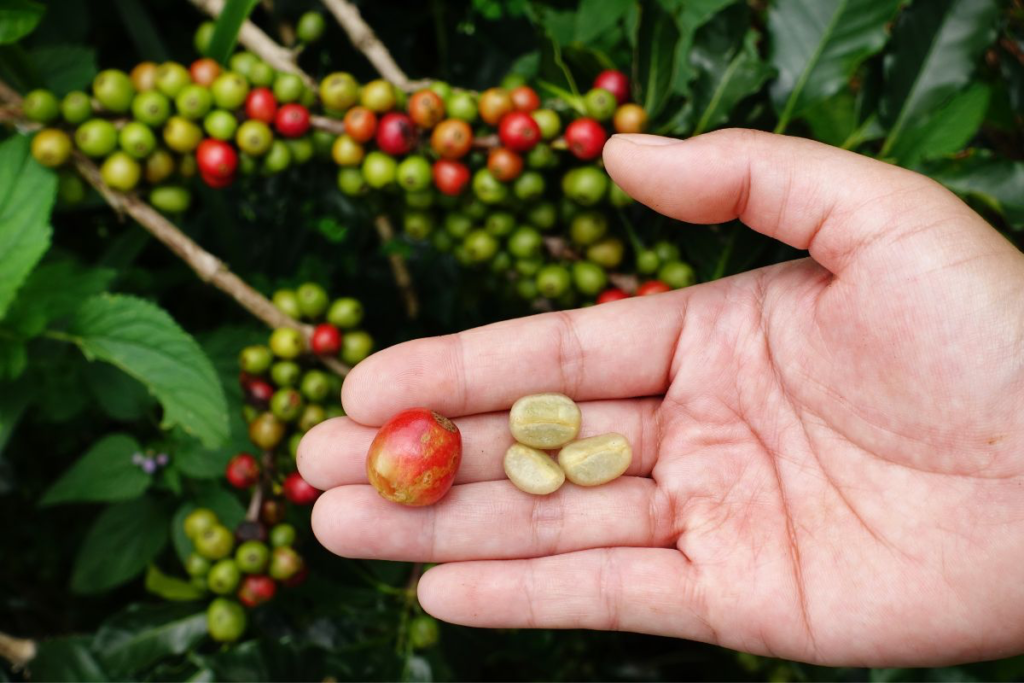
Near-infrared (NIR) spectroscopy represents a promising analytical approach in this context. Scientists already apply NIR technology widely in agricultural, pharmaceutical, and botanical analysis, where it is used to characterize plant materials, powders, and complex organic mixtures based on their spectral fingerprints. (Read about the NIR analysis of coffee here). These same principles could be applied to Ayahuasca, regardless of whether it appears as a powder, capsule, or processed plant material.
Because NIR spectroscopy is non-destructive and does not require chemical reagents, it is particularly well suited for rapid, on-site screening. Instead of targeting a single molecule, NIR analysis evaluates the overall spectral profile of a sample. This allows differentiation between substances with similar appearances but different chemical compositions.
From Complexity to Clarity: A Hypothetical Role for NIRLAB
Ayahuasca exemplifies the modern challenges faced by forensic and customs authorities: a culturally significant, multi-compound substance that defies easy classification and varies widely from sample to sample. Addressing such complexity may require analytical tools that are flexible, field-ready, and capable of adapting to evolving substance profiles.
In this context, portable near-infrared (NIR) spectroscopy solutions, such as those currently under development at NIRLAB, could represent a promising analytical approach. By incrementally expanding and refining spectral reference databases, NIR-based systems may improve their ability to recognize and differentiate complex plant-based mixtures over time. Each newly analyzed sample has the potential to contribute to a broader reference framework, strengthening future identification capabilities.
From a forensic perspective, such an approach could support evidence-based decision-making by enabling rapid, non-destructive screening while preserving sample integrity for confirmatory laboratory analysis where required. Rather than replacing established laboratory techniques, NIR spectroscopy would be expected to function as a complementary tool, supporting early assessment and prioritization in the field.
As substances like Ayahuasca continue to circulate globally in increasingly diverse forms, adaptable analytical strategies are likely to become more important. Ongoing research and development in NIR spectroscopy suggest a potential pathway toward clearer, faster, and more consistent assessment of complex botanical mixtures, supporting both enforcement efforts and informed regulatory decision-making in the future.